
Collaborative Writing Guide to Comparing Team Contributions
Collaborative Writing: Compare Team Member Contributions
Estimated reading time: 12 minutes
- Collaborative writing is multi-person work where contributions vary by stage and style, not just by word count.
- Compare contributions with a mix of quantitative tracking (edits, word counts, time) and qualitative judgment (idea impact, feedback quality).
- Use modern collaborative text editing tools and clear roles (writer, editor, reviewer, leader) to distribute work and create accountability.
- Set ground rules early, rotate roles, and run retrospectives to keep collaboration fair and effective.
- Peer assessment combined with metrics yields the most complete picture of who contributed what.
Understanding collaborative writing in modern content teams

Collaborative writing happens anytime two or more people work together to create a single piece of content. For content teams, it's often the default way work gets done. Each member brings strengths at different phases—concept, draft, review, and revision—and those strengths should be intentionally harnessed.
Important: contribution visibility varies. Someone who shaped the idea in a briefing may not appear in edit logs but still changed the direction of the piece. Effective comparison requires seeing both the visible and invisible inputs.
Why contribution visibility matters
Research on collaborative text editing shows that teams that recognize and leverage natural tendencies (idea generation vs. editing skill) produce higher-quality content faster. The trick is to capture contributions beyond raw edit history—consider who influenced decisions, who raised key questions, and who held the project together.
Types of contributions in team writing projects
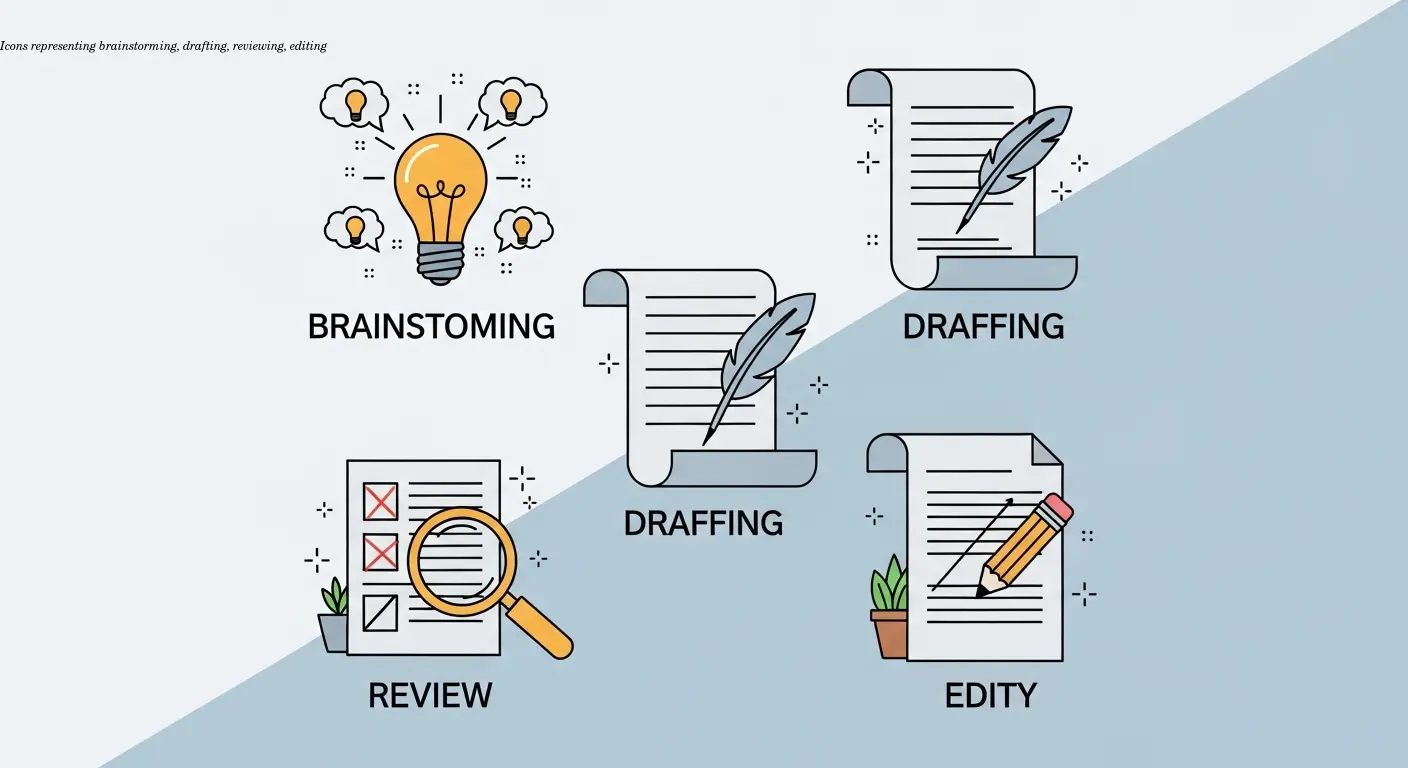
Categorizing contributions helps teams give credit where it's due. In practice, contributions fall into four broad types; most people naturally contribute to one or two:
Brainstorming and conceptualizing
Idea generation sets the direction. Brainstormers can shape the entire project in early meetings, but these inputs often leave little trace in editors. When comparing contributions, explicitly capture who shaped the concept.
Drafting
Drafting is the most visible work—words on the page. Cloud editors reveal who wrote which paragraphs, making quantitative comparison easier. Still, assign sections thoughtfully: some teams divide by expertise, others co-write live.
Reviewing and feedback
Reviewers contribute by asking questions, flagging inconsistencies, and suggesting improvements. Studies show broad participation in review leads to stronger outcomes. Credit reviewers for the impact of their insights, not just edits.
Revising and editing
Revision integrates feedback, tightens structure, and unifies tone. Often one editor does heavy integration work—this invisible effort deserves recognition equal to visible drafting.
Collaborative writing strategies that impact contribution patterns
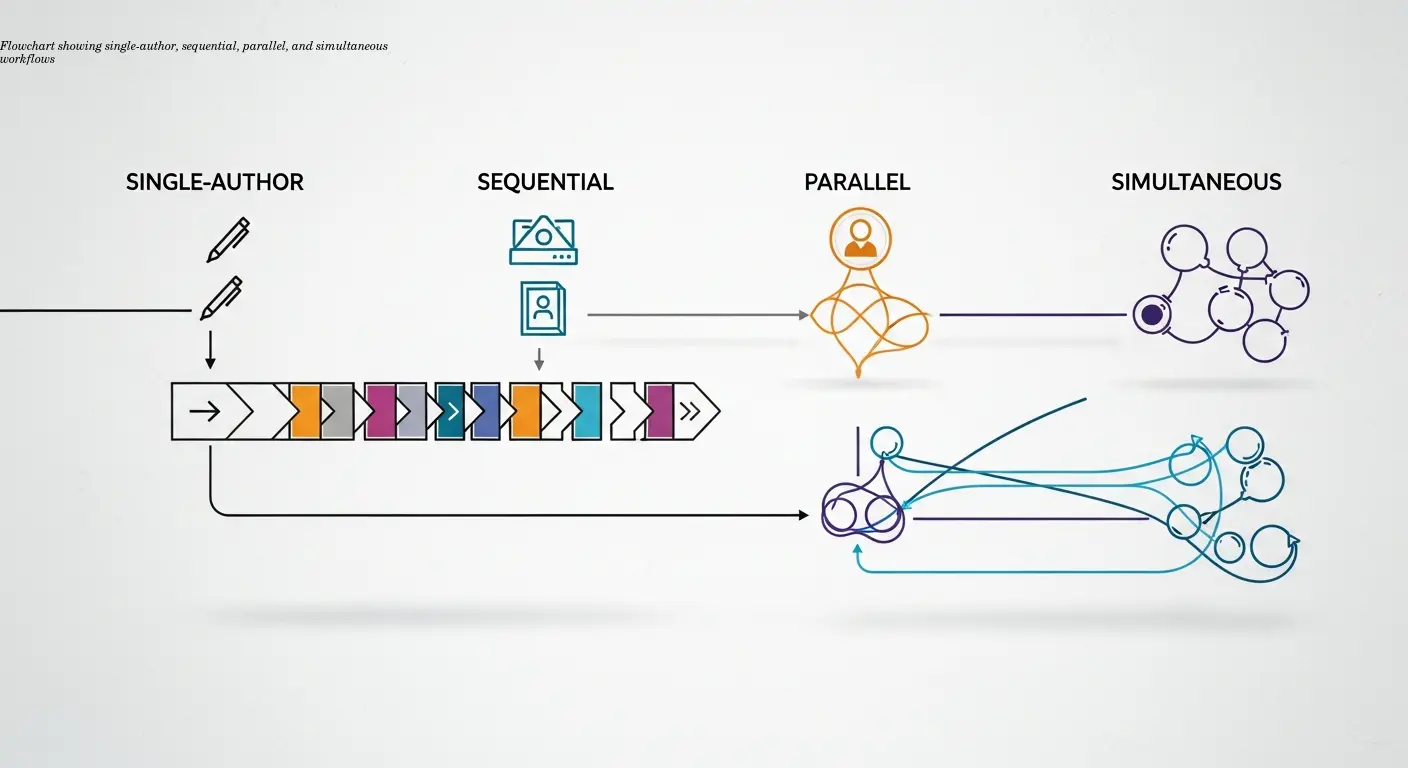
The chosen collaboration strategy shapes who contributes and how you compare contributions. Teams that never choose a strategy usually stumble; those that pick intentionally work more smoothly.
Single-author approaches
One primary drafter writes while others peer-review. This preserves a consistent voice—easy to audit—but relies on reviewers to provide meaningful input rather than rubber-stamping.
Sequential revision
The document passes from person to person. Edits appear in distinct timeframes, simplifying tracking. It's slower, and later contributors may feel boxed in by earlier choices.
Parallel writing
Teams split sections and draft concurrently. Fast, but evaluating contributions requires inspecting section quality plus the integration work needed to make everything cohesive.
Reactive or simultaneous collaboration
Real-time co-editing fosters creativity but complicates attribution. Who owns an idea that emerged in a live session? Careful tracking and contextual notes help.
The most effective teams combine strategies—simultaneous brainstorming, parallel drafting, and sequential final editing—depending on the task.
Team writing tools for tracking and comparing contributions
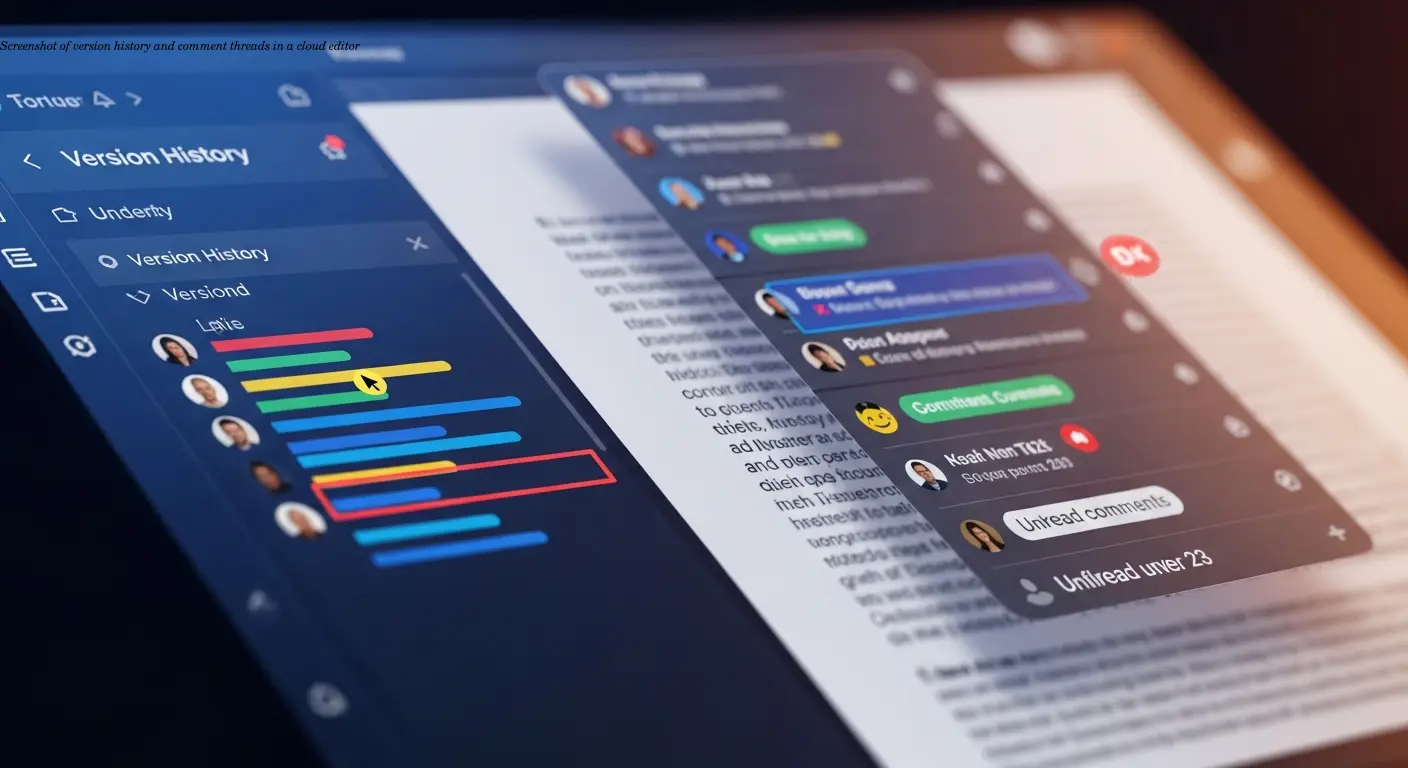
Tools matter. Moving from emailed Word docs to cloud-based editors transformed how teams track who did what.
Cloud-based editors
Google Docs and Microsoft Word with Track Changes automatically record changes, authorship, and timelines. Use these histories to identify gross imbalances and evolution of drafts.
Version control
Version history lets you compare document states and see who shaped each stage. It's a neutral tie-breaker when contribution disputes arise.
Communication tools
Slack, Teams, and in-doc comment threads preserve the context behind changes. Capture both the suggestion and the execution to credit idea originators accurately.
Attribution features
Color-coded cursors, contributor tags, and suggestion modes improve accountability. They help managers spot workload distribution issues across multiple projects.
Limitations: Tools capture measurable activity—edits, comments, time—but not pre-document brainstorming or strategic decisions. Technology is essential but incomplete.
Roles and responsibilities in content team collaboration
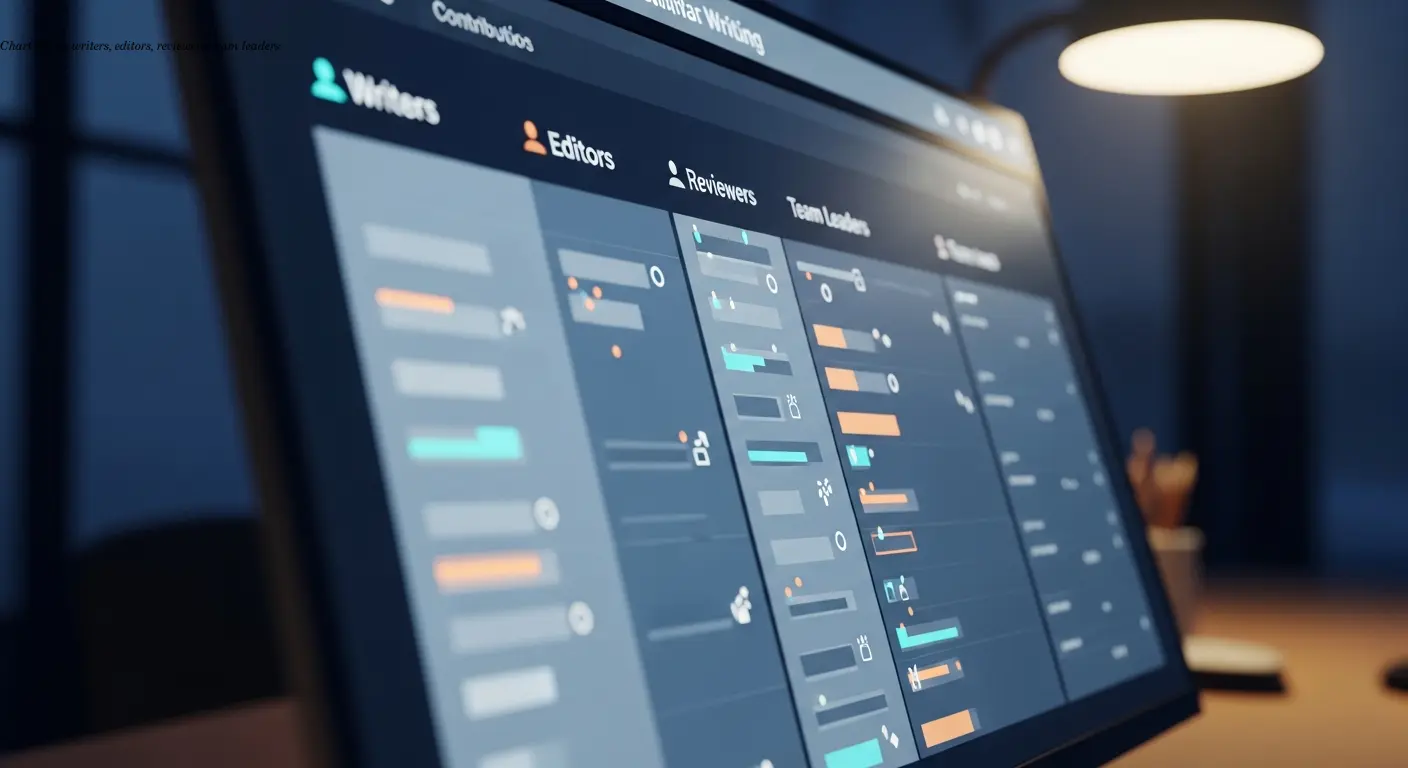
Clear roles prevent chaos. Define responsibilities even when roles rotate.
Writers
Writers draft content and often specialize by topic or format. Their contributions are visible, but word count is not the only measure—quality and fit matter.
Editors
Editors shape structure, tone, and clarity. A small number of edits can have large impact; credit this work accordingly.
Reviewers
Reviewers provide critiques and questions that improve drafts. Recognize both the reviewer who spotted a problem and the editor who fixed it.
Team leaders
Leaders coordinate schedules, resolve conflicts, and sometimes edit. Coordination is a valuable contribution even if it doesn't show up in edit logs.
Rotate roles to build empathy, spread invisible work, and prevent burnout.
Measuring and comparing individual contributions
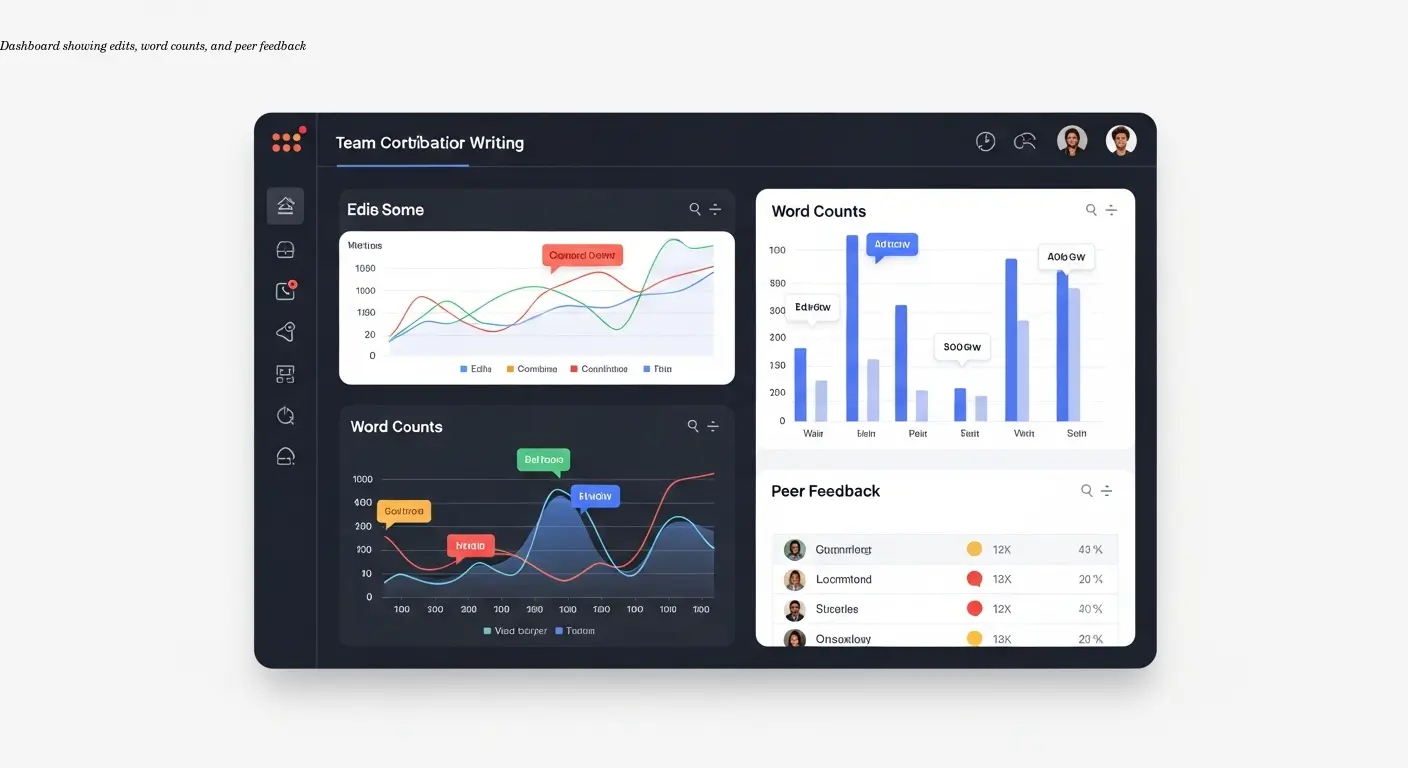
Fair comparison mixes quantitative and qualitative methods.
Quantitative tracking
Document histories provide word counts, edit counts, activity windows, and time-in-document. Use these metrics to flag obvious imbalances, but don't stop there.
Peer assessment
Have team members evaluate each other's contributions with targeted questions like "Who contributed most to the concept?" Peer insight surfaces invisible work but can be subjective.
Qualitative assessment
Judge impact: Did feedback improve the piece? Did coordination prevent delays? Combine metrics and peer input to arrive at a balanced view.
Best practices for fair and effective contribution management
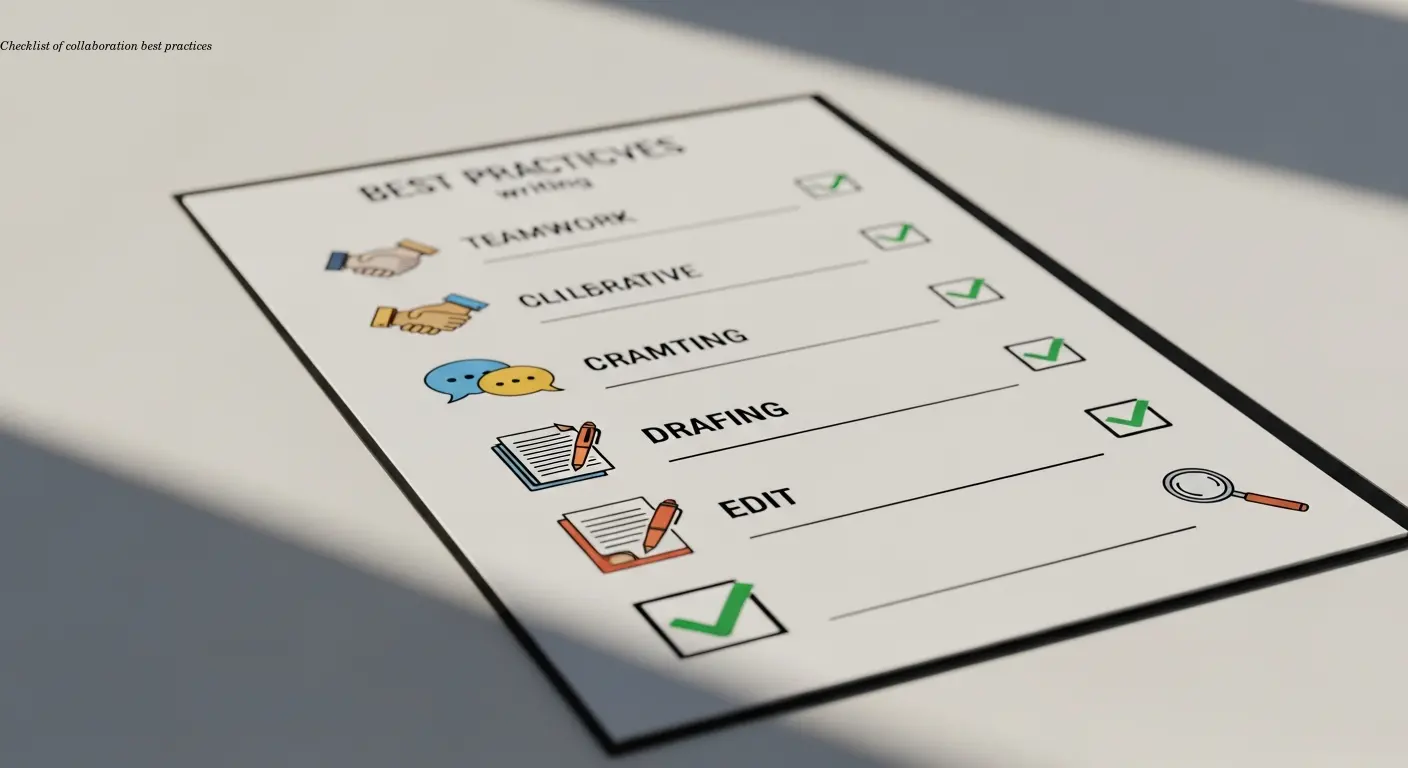
Simple practices, applied consistently, make collaboration more equitable:
- Set clear guidelines about participation, deadlines, and decision ownership.
- Encourage active inclusion with structured brainstorming and mandatory feedback rounds.
- Use iterative processes so roles can shift as the project evolves.
- Rotate roles to prevent invisible work from concentrating on a few people.
- Run post-project retrospectives to surface process improvements and recognition needs.
Common challenges and practical solutions

Most teams face a common set of problems. Each has a practical fix:
Workload imbalances
Make contribution data visible and run regular check-ins. If issues persist, have direct conversations to surface blockers or apply accountability.
Conflicting styles or opinions
Adopt decision mechanisms (voting, deferring to expertise, five-finger consensus) so disagreements resolve predictably.
Technology gaps
Train the team on core tools, create quick reference guides, and assign tech-savvy buddies to help others ramp up.
Lack of recognition
Explicitly praise editing, coordination, and idea contributions—what gets recognized gets repeated.
FAQ
How do you track individual contributions in Google Docs?
Google Docs automatically tracks contributions through its version history feature. Click "File" then "Version history" to see every change made to the document, color-coded by user. You can filter by contributor to see everything a specific person did, or you can review changes chronologically to understand how the document evolved. The activity dashboard also shows time spent in the document by each user, giving you quantitative data on participation.
What's the best way to divide writing tasks among team members?
The best approach depends on your team's strengths and the content type. For content requiring a consistent voice, assign one primary writer with others providing feedback and editing. For longer pieces, divide by section based on expertise—each person drafts the parts they know best. For teams with varying skill levels, pair less experienced writers with editors who can provide mentorship. Always assign an owner for final integration to ensure the piece reads cohesively.
How can you ensure equal participation in collaborative writing projects?
Set clear expectations upfront about what "participation" means for your specific project. Use structured processes like round-robin drafting or required feedback from all team members. Make contributions visible through shared task lists or progress tracking. Rotate roles across projects so everyone experiences different types of contribution. Most importantly, recognize and value all types of contributions, not just word count, so people understand that reviewing, editing, and organizing are just as important as drafting.
Should content teams use simultaneous or sequential editing?
Both approaches have merits. Simultaneous editing (multiple people in the document at once) works well for brainstorming sessions, real-time refinement, and teams with strong existing collaboration habits. Sequential editing (one person at a time) works better for major structural changes, specialized technical content, or teams still developing collaboration skills. Many content teams use both—simultaneous for initial drafts and discussions, sequential for detailed editing passes.
How do you handle team members who dont contribute enough to collaborative writing?
Start by investigating why. Are they unclear on expectations? Overwhelmed with other work? Lacking necessary skills or tools? Uncomfortable with conflict or sharing unfinished work? The solution depends on the root cause. For clarity issues, restate expectations explicitly and provide specific tasks. For workload problems, help reprioritize or redistribute work. For skill gaps, provide training or pair them with mentors. If someone is simply not pulling their weight despite support, have a direct conversation about accountability and consequences.
What metrics should you use to compare writing contributions fairly?
Use a combination of quantitative and qualitative metrics. Quantitative might include word count contributed, number of edits made, time spent in document, and comments/feedback provided. Qualitative assessment should consider impact of contributions (did they improve the content significantly?), difficulty of tasks completed, and non-writing contributions like coordination or strategic input. Peer assessment adds valuable perspective on contributions that metrics miss. No single metric tells the complete story—you need multiple lenses to assess fairly.
How often should content teams review contribution patterns?
For ongoing teams, review contribution patterns monthly or quarterly to catch imbalances before they become serious problems. For project-based work, review after each major deliverable. Always include a retrospective discussion after completing significant collaborative pieces—this helps the team learn and improve together. If you notice conflict or frustration emerging, review contributions immediately rather than waiting for the next scheduled check-in.
Can AI tools help track collaborative writing contributions?
AI tools are increasingly being integrated into team writing platforms to analyze contribution patterns, suggest task assignments based on team member strengths, and even predict potential collaboration bottlenecks. Some tools can analyze the sentiment and substance of comments to assess feedback quality, not just quantity. However, AI still can't fully capture qualitative contributions like strategic thinking or team coordination. Use AI as one input among many, not as the sole arbiter of contribution value.
Related Articles
Building an Autonomous AI News Agent with n8n & Bright Data (Part 1)
Learn how to build an autonomous AI-powered news scraper using n8n and Bright Data. Part 1 covers the Ingestion Engine architecture for 24/7 market monitoring.

Practical content migration guide for CMS comparison
Practical content migration advice to compare old and new CMS, validate data integrity, and avoid SEO loss. Best practices for developers and content teams.

A-B testing content tactics for growth marketers
A-B testing content strategies to boost conversions: test headlines, CTAs, one variable at a time, and run tests to significance. From proven growth teams.